To learn more about how you can contribute to this work, visit our Get Involved page.
Himalayan cliff honey is not collected from managed hives. It is taken from the wild nests of Apis laboriosa — the world's largest honeybee — built on exposed rock faces at elevations between 1,200 and 3,500 metres.
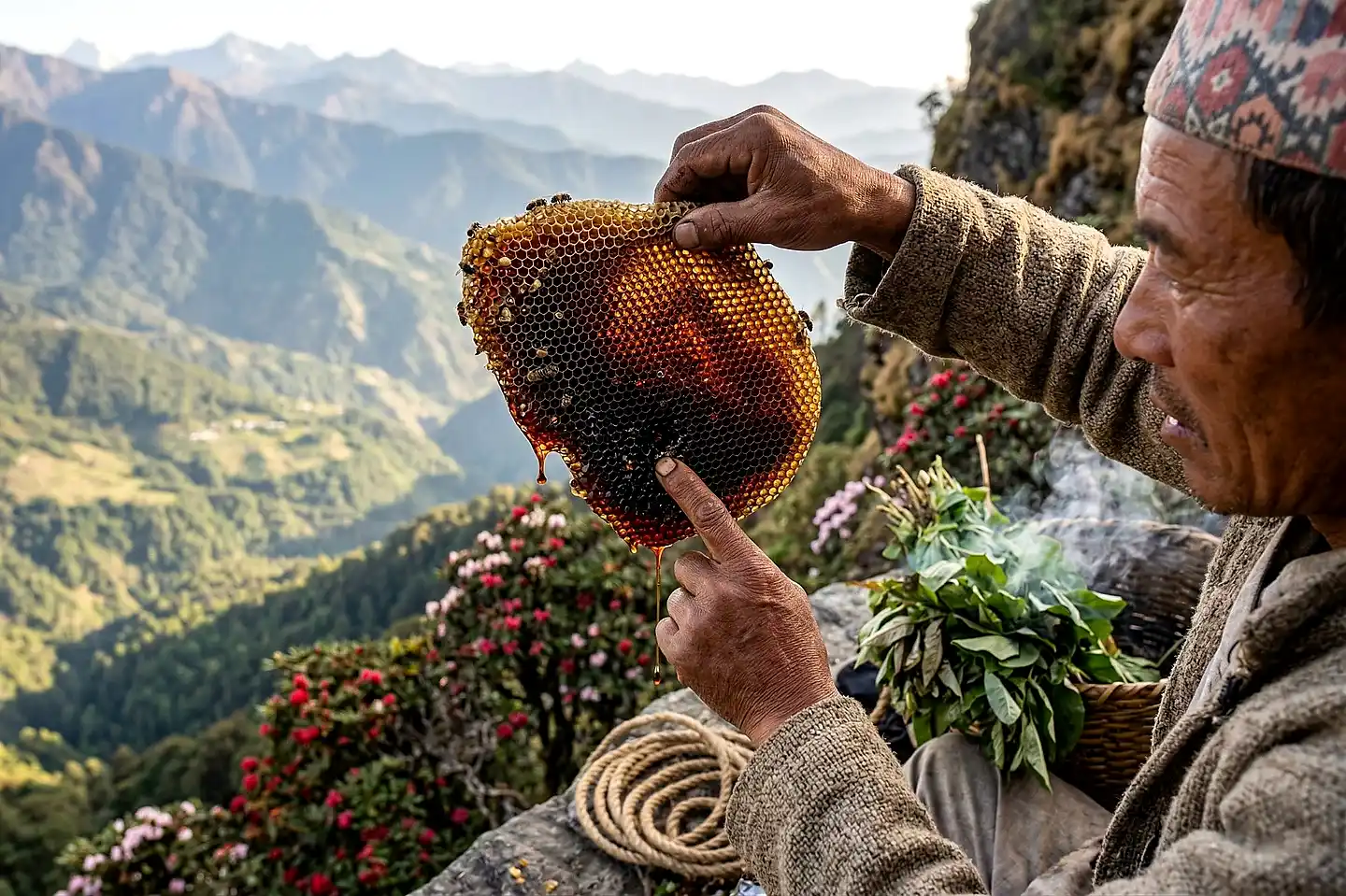
Harvesting requires a specific set of tools and techniques passed down through generations: hand-woven rope ladders lowered from cliff tops, long bamboo poles fitted with cutting blades to detach comb sections, and smoke from burning green vegetation to calm the colonies before approach.
The entire process depends on precise seasonal timing. Harvesters work during two narrow windows each year — spring (April–May) and autumn (October–November) — corresponding to the major Rhododendron flowering cycles that determine the honey's grayanotoxin content.
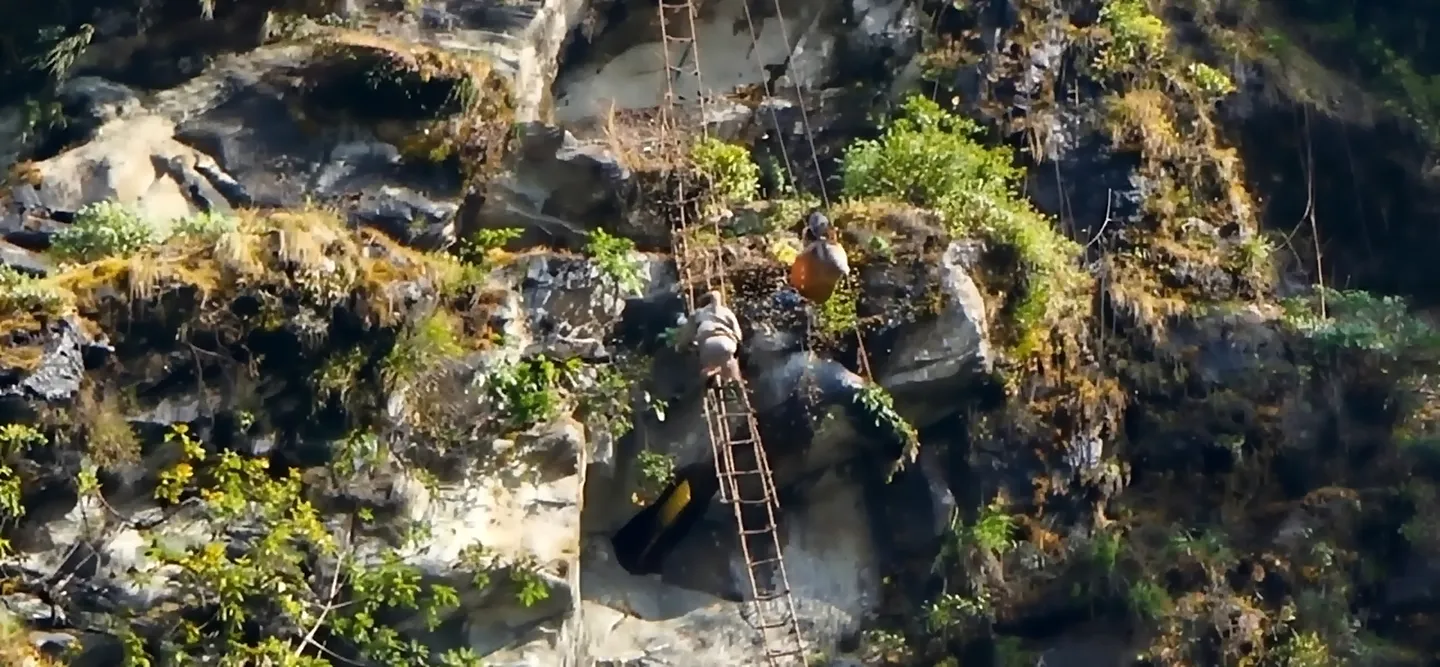
In the Annapurna and Mustang regions, Gurung honey hunters use a method that has remained largely unchanged for centuries. A team of 10–15 people works together: some managing the ropes from above, one or two descending to the nest, and others below collecting comb in woven baskets. Smoke is critical — both to subdue the bees and as part of a ceremonial offering before the harvest begins.
In the Kaçkar Mountains of Turkey's Black Sea coast, the approach is different. Beekeepers maintain managed hives in high-altitude meadows where Rhododendron ponticum dominates. The honey — known locally as deli bal — is produced by Apis mellifera rather than Apis laboriosa, and the grayanotoxin profile differs accordingly. The tradition here is one of small-scale pastoral beekeeping rather than cliff harvesting.
Traditional harvesters do not rely on laboratory analysis to assess their honey. They read the environment. The timing of the Rhododendron bloom, the altitude of the nest, the behaviour of the colony, and the colour and viscosity of the comb all inform decisions about when to harvest and what potency to expect.
This ecological knowledge is deeply practical. Experienced harvesters know which flowering periods produce the most potent honey, which cliff faces yield the largest colonies, and how weather patterns in a given year will affect both yield and composition.
IMHSI recognises this knowledge as essential evidence — not folklore. Our standards framework treats traditional ecological indicators as complementary data points alongside laboratory analysis.
To learn more about how you can contribute to this work, visit our Get Involved page.
For general enquiries, visit our Contact page.