Harvesting Communities

The people at the heart of mad honey — their livelihoods, landscapes, and traditions are central to everything IMHSI does.

Who Harvests Mad Honey?

Mad honey is not produced in controlled environments. It is harvested by skilled communities in remote, high-altitude regions where specific Rhododendron species grow alongside the wild bee colonies that forage on them.

For most harvesting families, cliff honey is one part of a broader subsistence economy that includes farming, livestock, and seasonal labour. The honey itself holds cultural significance beyond its market value — it is tied to identity, landscape, and generational continuity.

IMHSI works to understand and support these communities, ensuring that the standards we develop protect both the product's integrity and the livelihoods of the people who produce it.
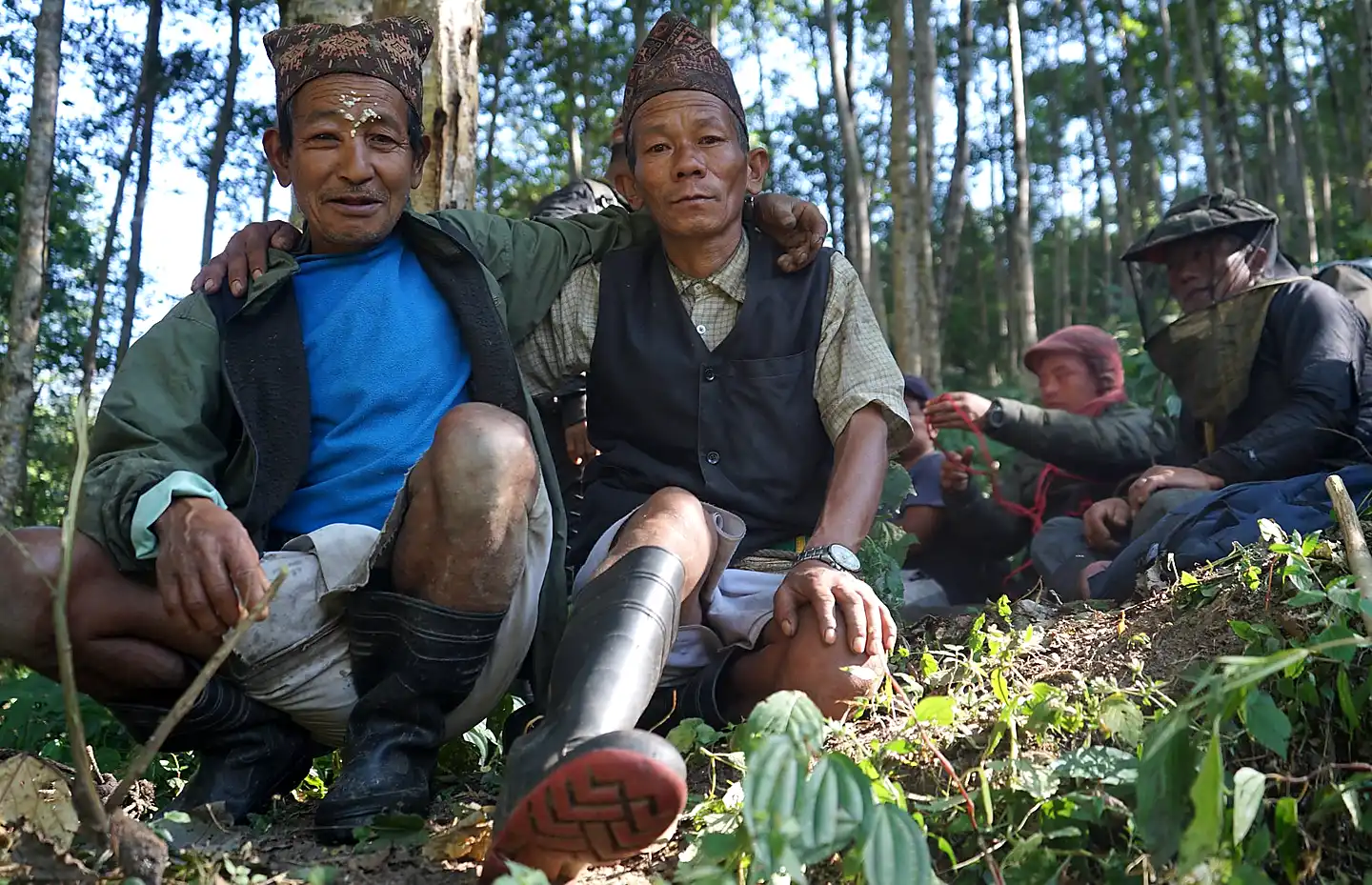
Two Gurung honey hunters wearing traditional embroidered Dhaka caps sit together in a sunlit forest smiling at the camera, with arms around each other, while other team members in protective bee veils rest in the background — representing the harvesting community behind Nepal's mad honey tradition.

Key Harvesting Communities

Gurung Honey
Hunters — Nepal:

The Gurung people of Nepal’s central highlands have practised cliff-face honey hunting for generations, using hand-made bamboo ladders suspended from cliff faces. They harvest from wild Apis dorsata laboriosa colonies twice a year. The spring harvest, when Rhododendron arboreum is in bloom, produces the most potent honey.

Black Sea
Beekeepers — Turkey:

In the Rize and Artvin provinces of northeastern Turkey, smallholder beekeepers maintain hives in high-altitude Rhododendron ponticum meadows. Families often manage between 20 and 100 hives, producing small-batch deli bal sold primarily at local markets and increasingly to international buyers.

Emerging Regions:

Communities in Bhutan, the Indian state of Sikkim, and parts of the South Korean highlands also produce honey with grayanotoxin content. IMHSI is engaged in early-stage research and community outreach in these areas to understand local practices and needs.

IMHSI’s Commitment to Communities

A certification framework is only meaningful if the people who produce the product can participate in it. IMHSI is designing its standards with community access in mind:

Accessible Pathways

Tiered entry points so small producers are not excluded by cost or complexity.

Field-Based Verification

On-site sampling protocols that don’t require producers to ship samples to distant labs.

Community Representation

Harvester representatives included in standard-setting committees.

Fair Pricing Advocacy

Working with buyers and importers to ensure communities receive equitable value for certified honey.
If you represent a harvesting community or work with producers in these regions, we would like to hear from you. Please visit our get involved page or contact us directly.

IMHSI

An independent standards institute dedicated to safety, ethical compliance, and traceability in the Mad Honey supply chain.

REACH US

info@imhsinstitute.org

LEGAL

Privacy Policy Disclaimer

Subscribe to Our Newsletter

Get the latest research, community updates, and IMHSI news in your inbox.


For general enquiries, visit our Contact page.

Copyright © 2026 IMHSINSTITUTE. All rights reserved.